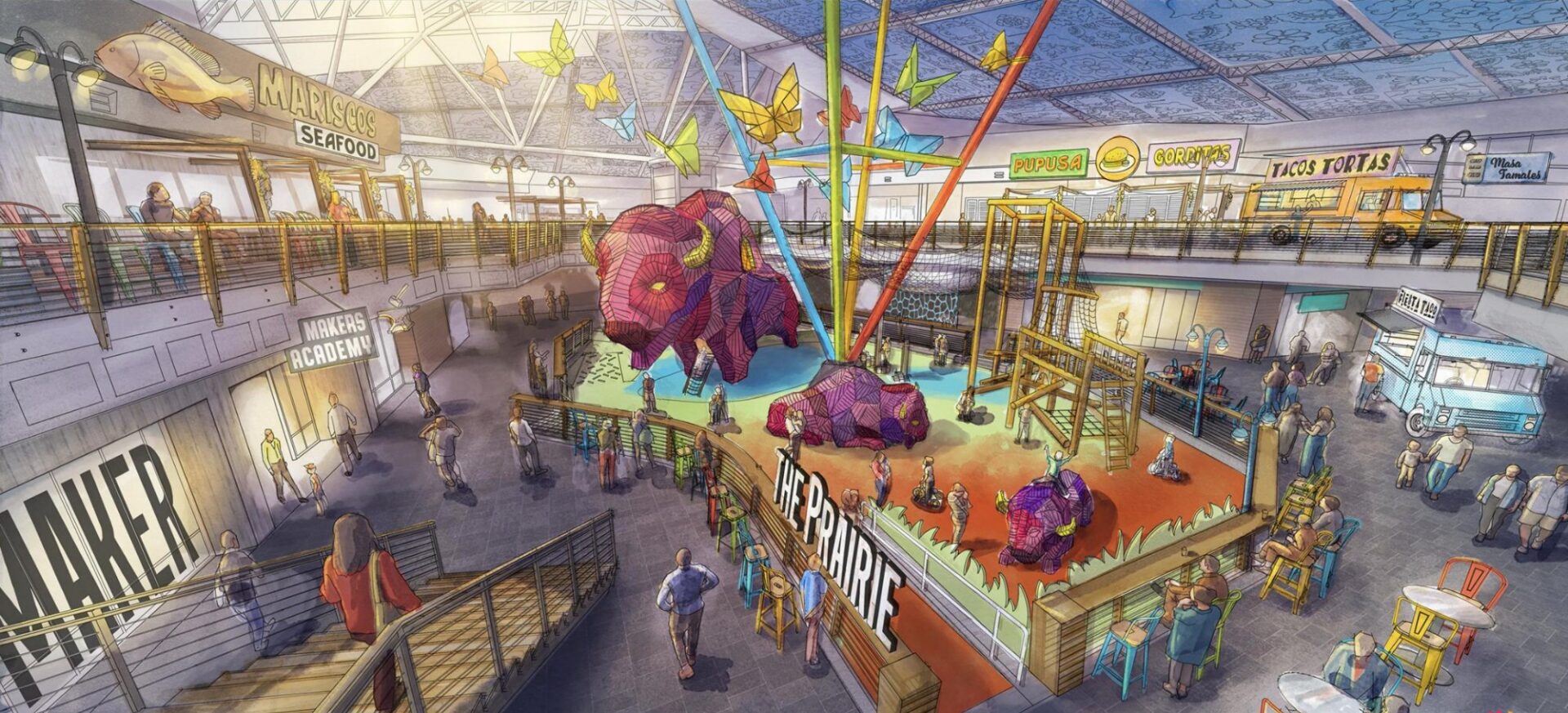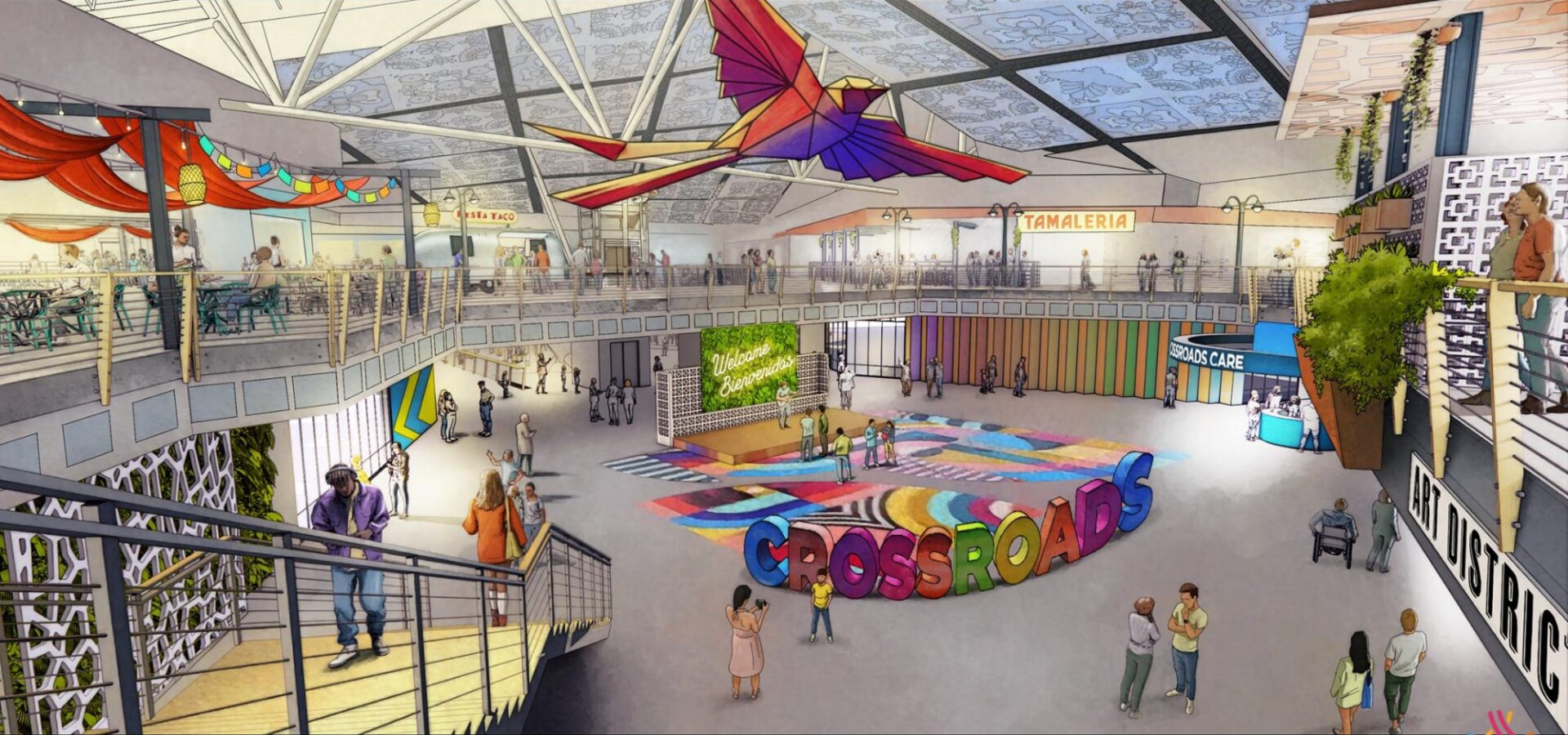

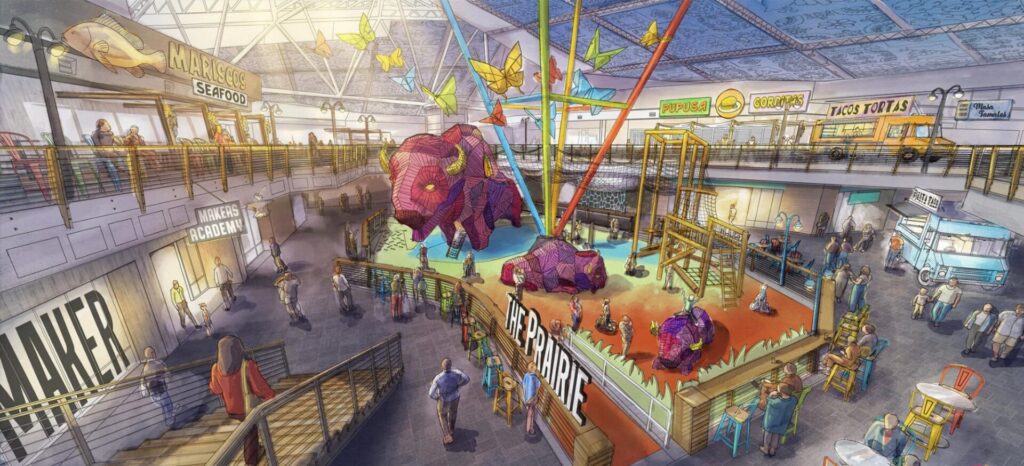
South Oklahoma City has long been a neighborhood rich in people and potential, and underserved by the institutions that help both thrive. The Crossroads Renewal Project is changing that. CRP is developing a first-of-its-kind community campus in South OKC that brings together quality schools, businesses, and services under one roof, designed not just to serve the neighborhood, but to belong to it.
The vision is simple and ambitious at once:
create a place beautiful enough to draw people in, and substantive enough to give them a reason to stay. This is not a development that will quickly extract from the community and move on. When the CRP team toured the property for the first time, it was immediately clear that this was what they had envisioned: take a center for Southside OKC that once housed thriving restaurants, retail, and movie theaters, and recreate it into a space that is sustainable long term while honoring the history of what it once was.
More Than a Building
CRP is rooted in Christian faith and a conviction that every person deserves access to beauty, opportunity, and care. The project is built around a single idea: that children and families flourish when the right resources exist in the right place, working together. That means quality education alongside healthcare. Childcare near professional workspaces. Green space, play areas, and community gathering spots woven into the fabric of everyday life. Not siloed services, but a genuine ecosystem.
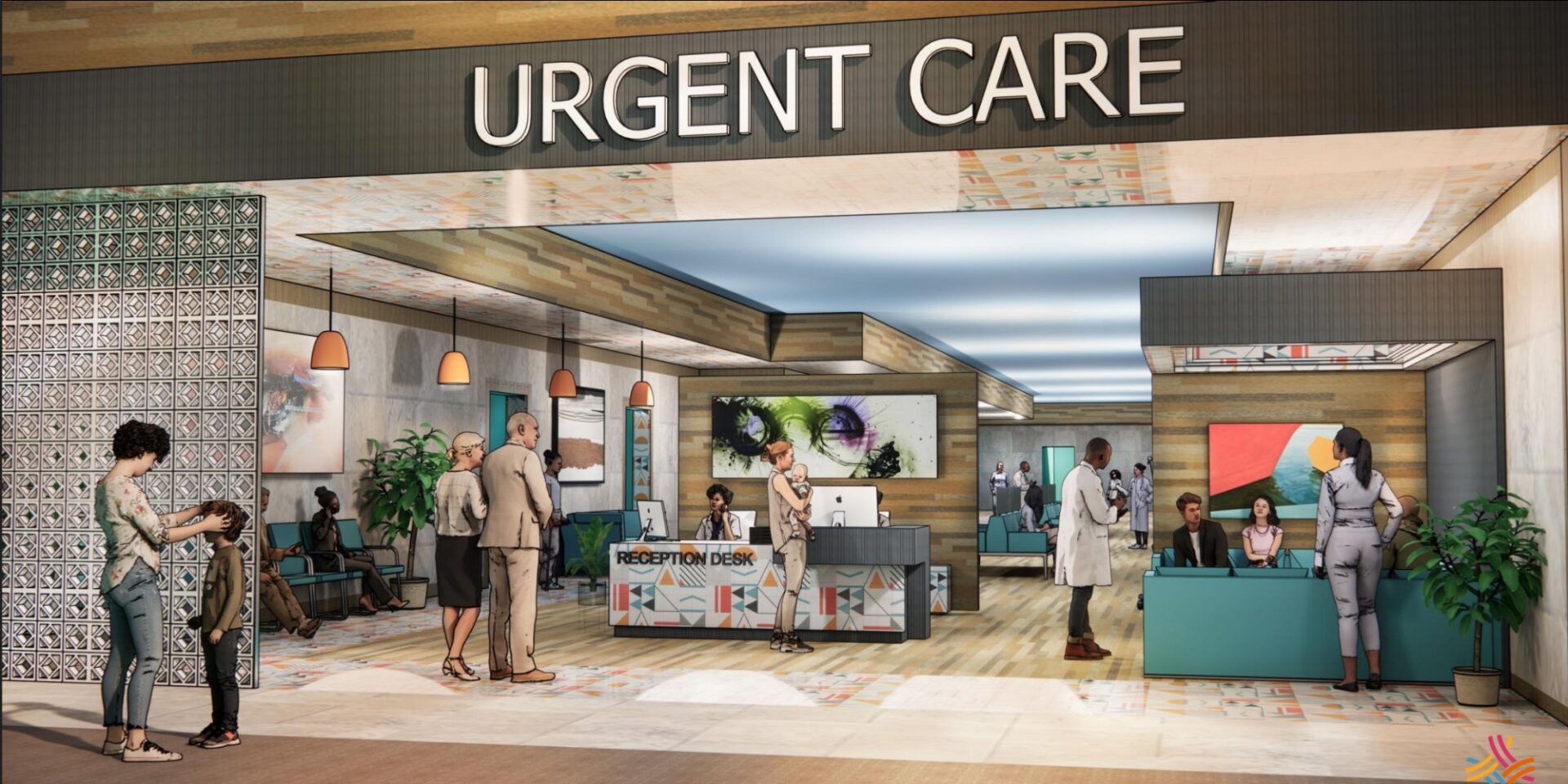
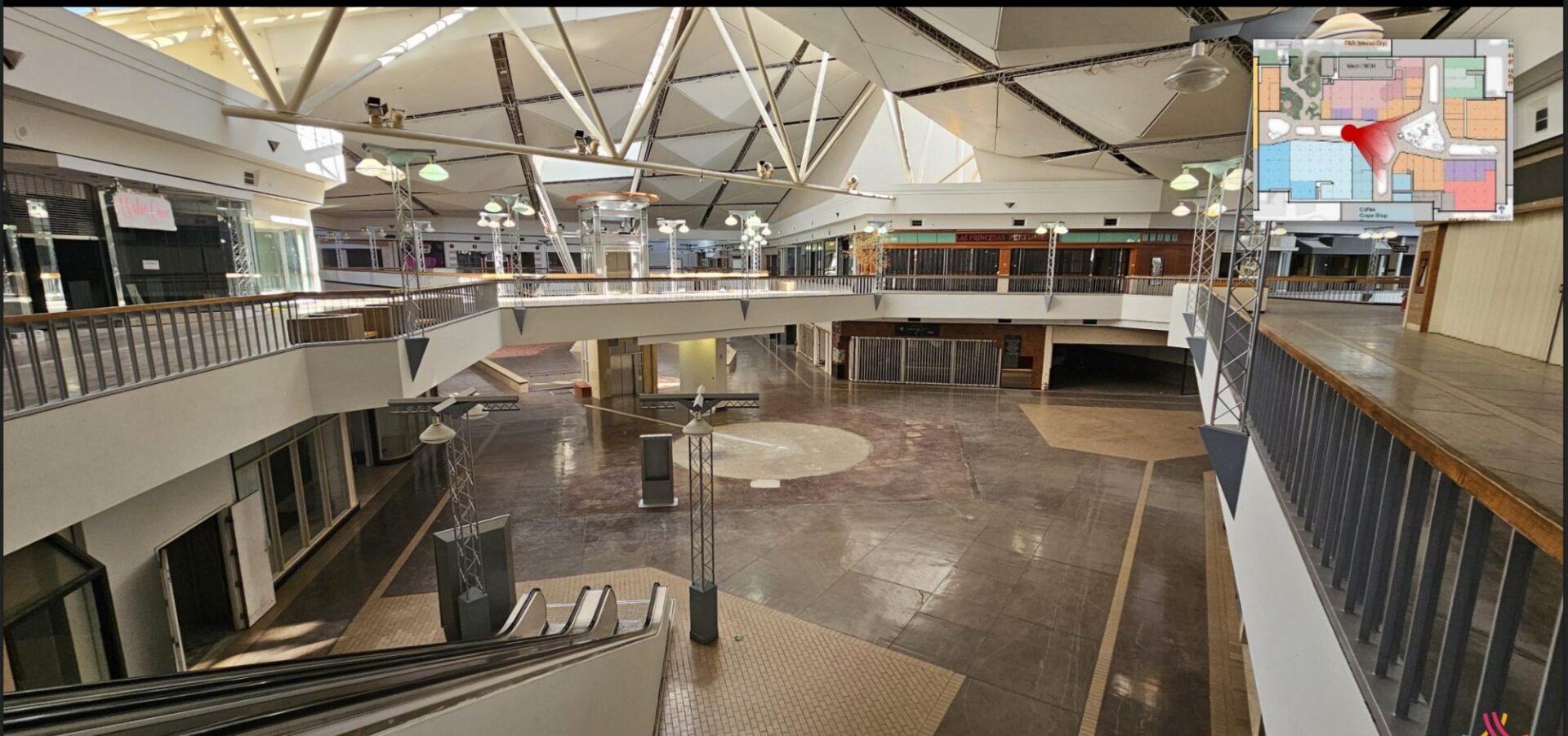
One of the challenges with a property like Crossroads is the scale of what has been left behind. The building has sat largely vacant for twenty years, and what remains tells the story of a community center that was once full of life. Abandoned storefronts still hold remnants of the businesses that occupied them. Escalators that have not moved in decades. A food court and carnival area that once drew families from across the city now sit silent. Crossroads will not be demolished, nor will the distinctive architecture that defines it. Instead, it will be restored. Windows that have been broken for years will be replaced. Storefronts will be returned to the condition they once held. The former JC Penney will be transformed into a healthcare destination for families in the surrounding community.
What’s Being Built
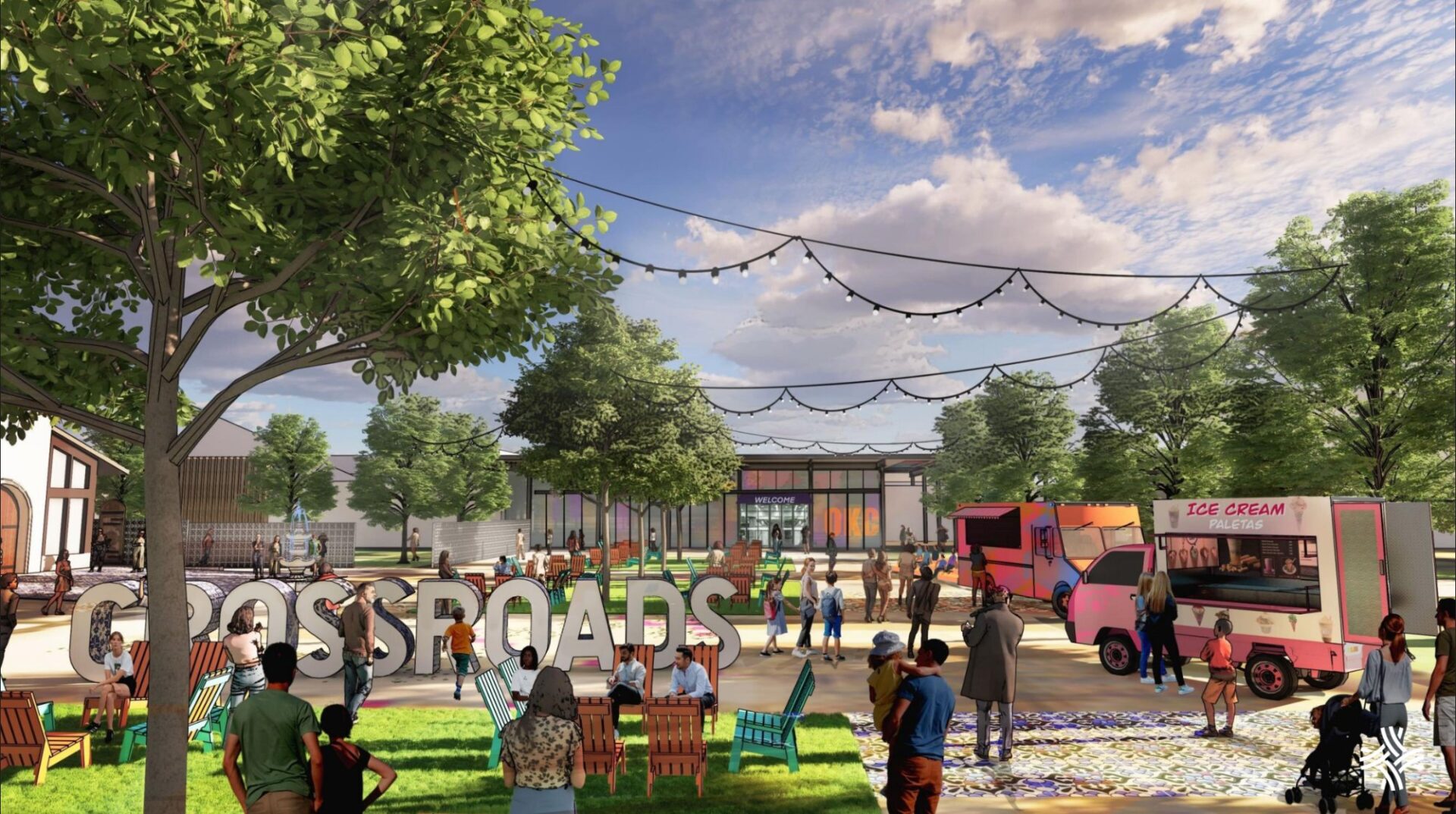
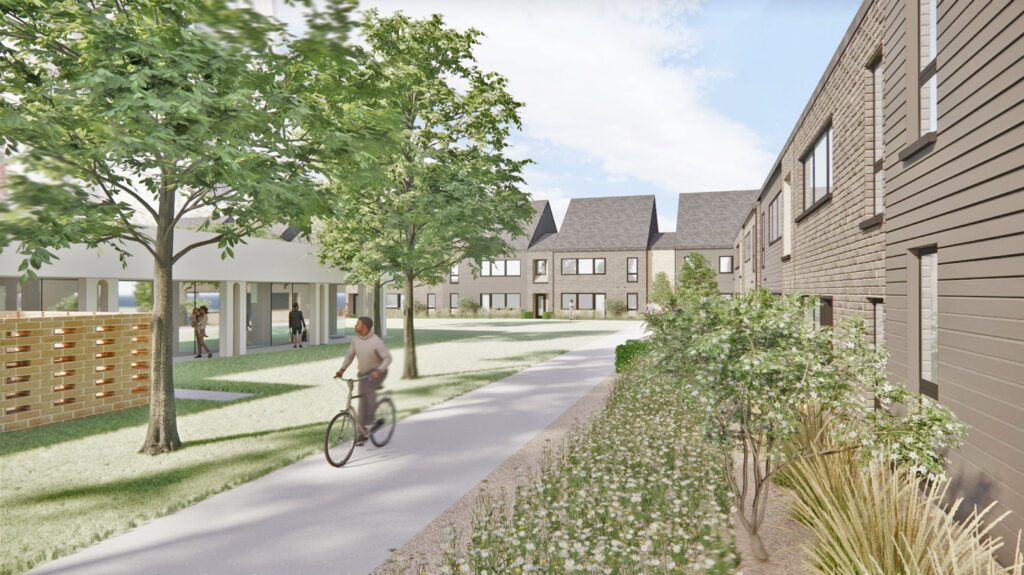
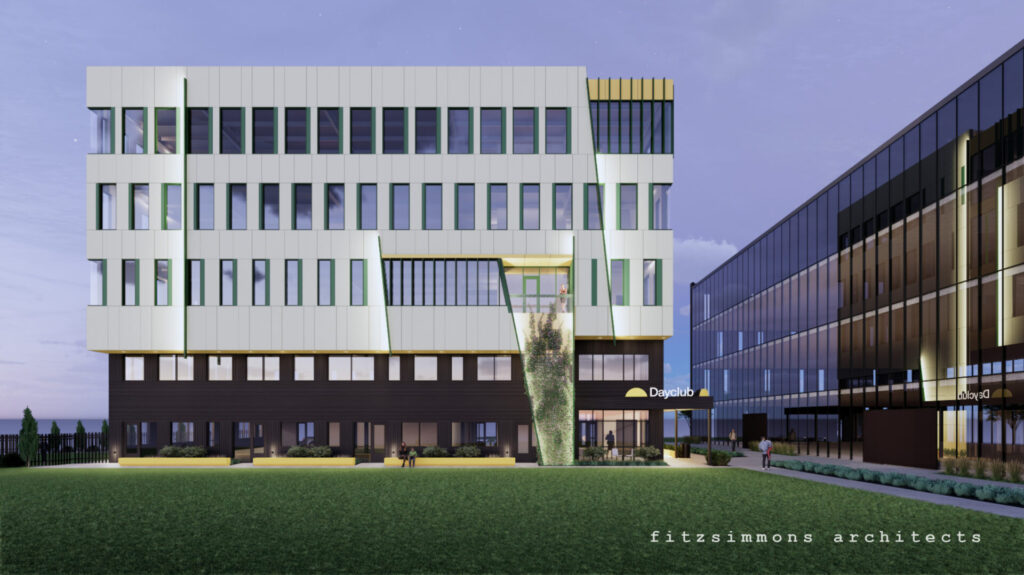
The campus is currently in development and fundraising, with a plan that brings together the full range of what a community needs to thrive. Medical care, restaurants, schools, and retail will share the same space, made possible in part by the donors who have invested in this vision. Professional office and workspace will sit alongside ground-floor community services and dedicated children’s programming. On-site housing will be available for families who need it. An outdoor park and play area will be open to tenants, families, and neighbors alike. The design prioritizes walkability, beauty, and a genuine sense of welcome. Families will find restaurants and gathering spaces at the entrances. Parents will be able to access healthcare in the same building where their children attend school. The project is being developed in partnership with local nonprofits and faith communities, with a long-term commitment to neighborhood ownership and sustainability.
The Case for Crossroads
Abandoned malls are appearing across the country, and very few are attracting any serious attention. When you are talking about one million square feet of developed, inhabitable land, most developers will not touch it unless the profit margin justifies the risk. And that hesitation comes down to a single question that every potential investor eventually asks: how do you drive enough foot traffic to break even, and then sustain the kind of volume that keeps tenants profitable? It is a question we asked ourselves. We watched, we waited, and we eventually arrived at an answer that turns out to be simpler than most expect. Foot traffic is not difficult to generate when a significant number of people live on site.
Crossroads is not a standalone retail destination that requires a certain number of annual visitors to survive. It is a revitalization of land and property that is sustained by its own community. Everyone needs to see a doctor. Everyone needs a bank. Everyone needs housing. Everyone needs a school. In that sense, this is its own small city, and it functions accordingly. What makes this work is not a flashy concept or a novel approach to retail. It is not a reinvention of the economic model that doomed its predecessor. It works because the Southside community is strong, and because for twenty years, the people of this neighborhood drove past that building every day remembering what it once was and waiting for someone to do something with it. We had a potential tenant tour the property recently. On his way over, his driver mentioned that she had worked at the mall twenty years ago and wanted to know where the movie theater had gone. She was not aware the building had been vacant for two decades.
On a separate tour, another prospective tenant walked the corridors pointing out storefronts, telling us his friend had worked in that exact space and that it looked exactly as he had left it. These people do not see a vacant building. They see what it was, and in many ways, still is. That is the distinction that matters. Crossroads was never designed to be a sixteen-story mixed-use tower optimized for maximum occupancy and return per square foot. It was designed to be a staple of the community, and that is precisely what people remember it as. They remember the JCPenney at Christmas. They remember the long corridors and getting turned around in 1,250,000 square feet of space. They remember all of it, and they want it back. That is why we took this project.
Our Approach
Our mission is to give nonprofit development first priority, and not just first priority in name, but genuine access to world-class development tools and options. Creative financing structures, tax credit utilization, tax increment financing, and every available mechanism we can bring to bear to make this campus financially accessible to the members of Southside OKC. Because when you step back, what this project is really about is taking five million dollars and turning it into fifty million, and then returning that fifty million to the community that created it.
Any developer can offer an investor a strong return. What we are doing is something different: the return here is not a check, it is a restored community. The fifty million dollars of value being created belongs to the people of Southside Oklahoma City. We receive emails regularly from people requesting use of the space. Cinco de Mayo celebrations, school proms, community gatherings of every kind. People are asking to use a vacant mall that has sat empty for twenty years, sometimes just for the parking lot, because they still see it as a center of life. That perception is not nostalgia. It is an asset, and it is the foundation this project is built on. Why It Matters Across the country, the decline of the American mall has left communities with large, vacant properties and no clear path forward.
The Crossroads Renewal Project offers a different answer: return the property to the community that once depended on it, rather than allowing it to sit untouched or be repurposed for outside interests. South OKC has the people. It has the need. What it has lacked is a coordinated, sustained investment in the kind of infrastructure that makes a neighborhood genuinely livable. The Crossroads Renewal Project is building that infrastructure, and building it with the community rather than for it.
Our hope is that Crossroads demonstrates three things: that abandoned buildings are not permanent liabilities, that with the right approach they can be converted into genuine community assets, and that the people who once filled a place to capacity are exactly the right people to bring it back. We are returning this space to the spirit of what it once was, building it to last, and building it to benefit the same community it once served. This campus will serve as a model for cities across the country that are reconsidering how to activate properties that have long been treated as liabilities. More than that, it will be a place where the residents of South Oklahoma City can access what they need, find opportunity, and belong.
Interested in partnering with or supporting the Crossroads Renewal Project? Get in touch.